BestQool Red Light Therapy Panel
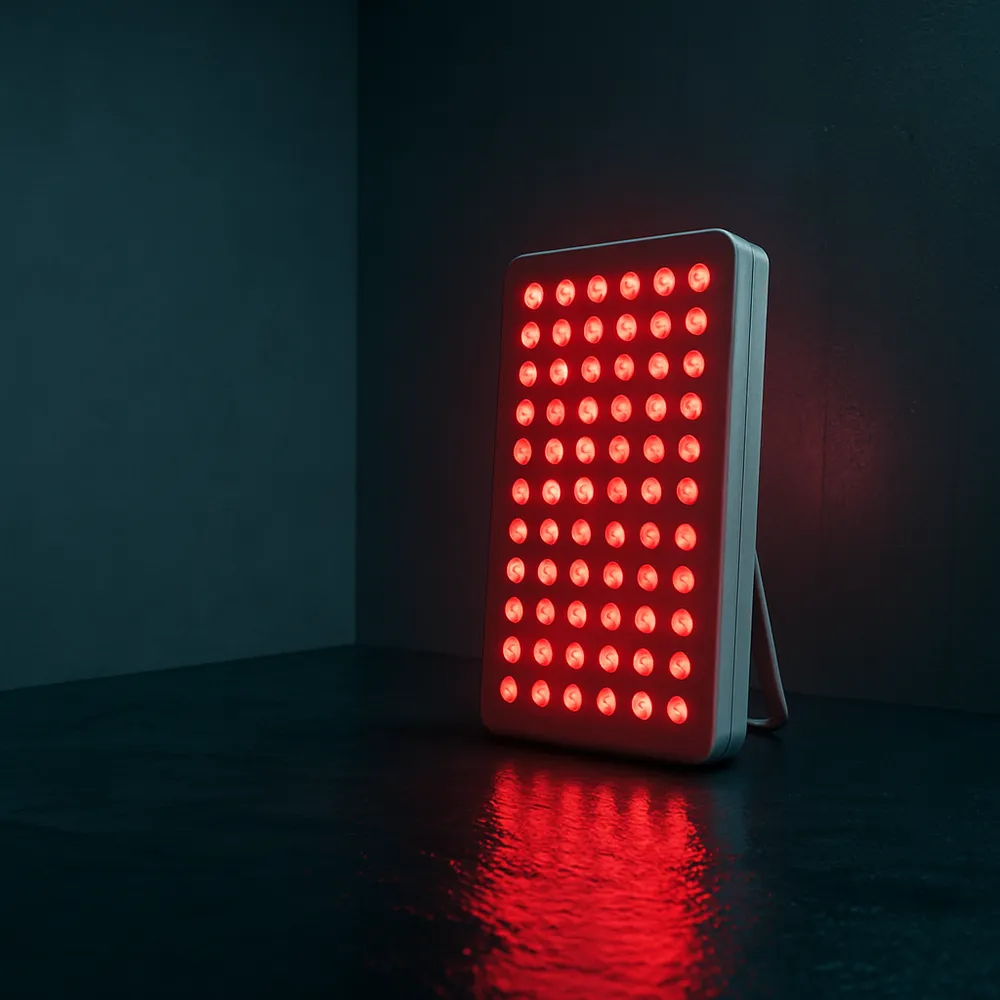
The BestQool BQ60 is a compact dual-chip (660nm red + 850nm near-infrared) LED panel with 60 LEDs, 105W draw, and roughly 95.6 mW/cm2 irradiance at 3 inches. It's a solid mid-size pick for targeted skin and localized recovery, where the evidence is strongest, provided you respect dose and distance.
Rate this pick
Our own community ratings — from confirmed Amazonia readers, never Amazon. Yours helps the next person decide, and steers what we feature next.
What does the research say about the BestQool Red Light Therapy Panel?
Every claim below is tied to a source you can open, quoted verbatim — how we research picks.
-
“we were able to identify that currently around 70% of doses that presented positive results for performance enhancement in large muscle groups are between 120 J and 300 J”
A 2019 expert review of 50+ RCTs concluded photobiomodulation (red/near-infrared) applied before exercise can modestly improve muscle performance and recovery within a dose window (~120-300 J for large muscle groups), while cautioning that evidence quality needs improving and that exceeding the dose window worsened outcomes.
Leal-Junior et al., Brazilian J. Physical Therapy · 2019 ↗ -
“LLLT plus ET is no more effective than placebo LLLT plus ET in improving ROM, muscle strength, and function in KOA”
A 2023 systematic review (14 RCTs, 820 patients) found low-level laser therapy added to exercise reduced knee osteoarthritis pain (SMD -0.58) but was no more effective than placebo for range of motion, muscle strength, or function.
Systematic review & meta-analysis, Somatosensory & Motor Research · 2023 ↗
Educational summary of the research — not medical or veterinary advice. Evidence strength varies and individual results differ; talk to a qualified professional before changing your (or your pet's) health routine.
How does the BestQool Red Light Therapy Panel compare?
| BestQool panel | Handheld wand | Full-body panel | |
|---|---|---|---|
| Treatment area | Medium (~17 x 12 in zone) | Small (spot-only) | Large (head-to-toe) |
| Irradiance at usable distance | High (~95 mW/cm2 at 3 in) | Variable, often low | Moderate to high |
| Wavelengths | 660nm + 850nm dual-chip | Often single/red-only | Usually 660nm + 850nm |
| Footprint | Compact, desktop/stand | Most portable | Bulky, needs floor space |
| Price tier | Mid | Low | High |
Buy it if
- Recovery-focused users wanting targeted red/NIR on a specific joint, muscle, or facial zone
- Skin-health users (fine lines, roughness, collagen) where controlled-trial evidence is strongest
- Buyers who want clinically-relevant irradiance in a compact footprint
- People who will actually dial in dose and distance
Skip it if
- Anyone wanting fast full-body coverage in one session - get a larger panel
- Buyers expecting cures for systemic conditions
- Those unwilling to track distance, time, and frequency - underdosing makes any panel underperform
Is the BestQool Red Light Therapy Panel worth it?
The BQ60 nails the fundamentals that matter - real 660nm/850nm dual-chip output and credible near-contact irradiance - in a compact, FDA Class II cleared package. It earns its place for targeted skin and localized recovery, where the controlled-trial evidence is genuinely strong. Just treat dose and distance as the active ingredients, not the panel itself.
Check price on Amazon Live price & reviews on AmazonQuestions, answered
- Does the 850nm near-infrared actually penetrate deeper than the red?
- Yes. 660nm red is absorbed more superficially (skin, surface tissue), while 850nm near-infrared penetrates deeper toward muscle and joint tissue. The dual-chip design delivers both per LED, so a session targets surface skin and deeper recovery at once. Source Leal-Junior et al., photobiomodulation review, Braz. J. Phys. Ther. (2019) ↗
- How far away should I sit and for how long?
- Dose is everything. The maker rates ~95.6 mW/cm2 at 3 in and suggests 15-30 min sessions, 4-7x/week. Closer means higher dose; farther covers more area at lower intensity. Treat distance and time as your real dosing dials. Source Leal-Junior et al., dose-window review, Braz. J. Phys. Ther. (2019) ↗
- Is the evidence strong enough to justify it?
- Honestly: strongest for skin rejuvenation/collagen and localized wound/recovery, where controlled trials show benefit. Systemic or performance claims are weaker and dose-dependent. Buy it for targeted skin and recovery work, not as a cure-all. Source Wunsch & Matuschka, skin/collagen RCT, Photomed Laser Surg (2014, PMC) ↗Leal-Junior et al., dose-dependent performance review (2019) ↗
- BestQool panel or a full-body red light panel - which should I get?
- The BestQool covers a medium ~17 x 12 in zone with high irradiance (~95.6 mW/cm2 at 3 in) and dual 660nm + 850nm wavelengths, in a compact, mid-priced footprint. A full-body panel treats head-to-toe in one session but is bulky, needs floor space, and costs more. Get the BestQool for targeted skin and localized recovery; a full-body panel if you want fast whole-body coverage at once.
- Does red light therapy work for joint pain like knee arthritis?
- Partly, with an honest limit. A 2023 systematic review (14 RCTs, 820 patients) found low-level laser therapy added to exercise reduced knee osteoarthritis pain (SMD -0.58) but was 'no more effective than placebo... in improving ROM, muscle strength, and function.' And an expert review found benefits only within a dose window (~120-300 J), with outcomes worsening if you exceed it. Expect pain relief, not a functional cure - and respect the dose. Source Systematic review & meta-analysis, Somatosensory & Motor Research ↗Leal-Junior et al., Brazilian J. Physical Therapy ↗